The Real Challenge of Going Solo
Especially for Qualified Professionals
This past month, I've been talking to a number of solo consultants, and I noticed something interesting.
These were people who were genuinely excellent at what they do. Strategy, operations, finance, change management.
Decades of experience. And yet, almost every conversation had the same undertone.
These highly qualified professionals were struggling to re-create the business systems they were used to having around them.
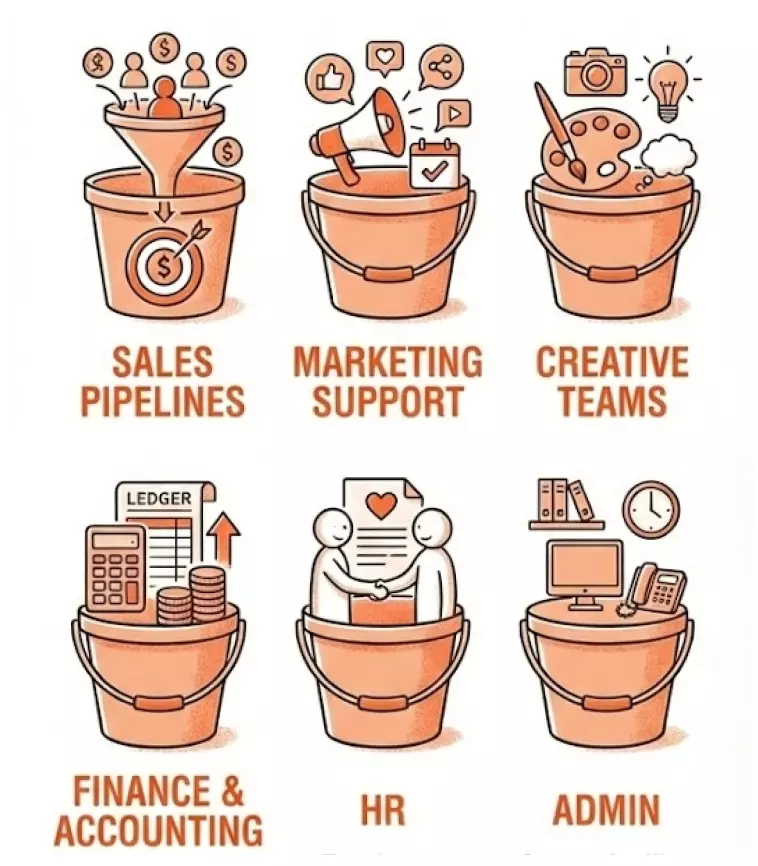
Sales pipelines. Marketing support. Creative teams. Finance, accounting, HR, the list goes on. All essential parts of any organization.
Why Qualified Professionals Struggle
This struggle did not come from a lack of understanding.
They absolutely knew how those functions work.
They knew what good work looks like.
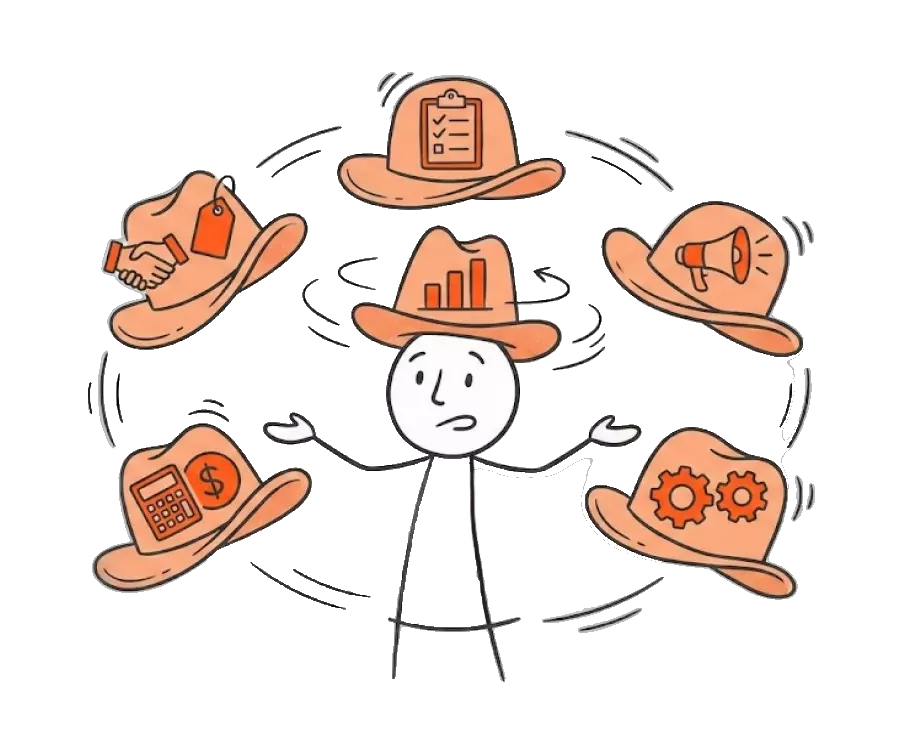
The challenge is that now, as solopreneurs, they are the sole decision-maker and the only person executing the work across every function. In practice, they were wearing all the hats.
The Context-Switching Tax
And every time they put on a new hat, they had to reset their thinking. They had to remember what had already been done in that function and then move forward with a new set of decisions.
"I know what a good pipeline looks like - but which CRM?"
You switch to marketing and think,
"I know what good content looks like - but which tools?"
And you do that all day. Switching contexts. Switching responsibilities.
At the end of the week, it often feels like no real progress was made in your own business.
Even if you poured all your energy into making that one post or finishing that one task, you step back, look at the bigger picture, and realize there is still so much more to do.
The Pipeline Problem
And then there's the other question that quietly creeps in.
You're at the client, fully executing on the project you already closed. Who is keeping the pipeline going?
"Who's going to follow up? Who's responsible for marketing? Who's thinking about what comes next?"
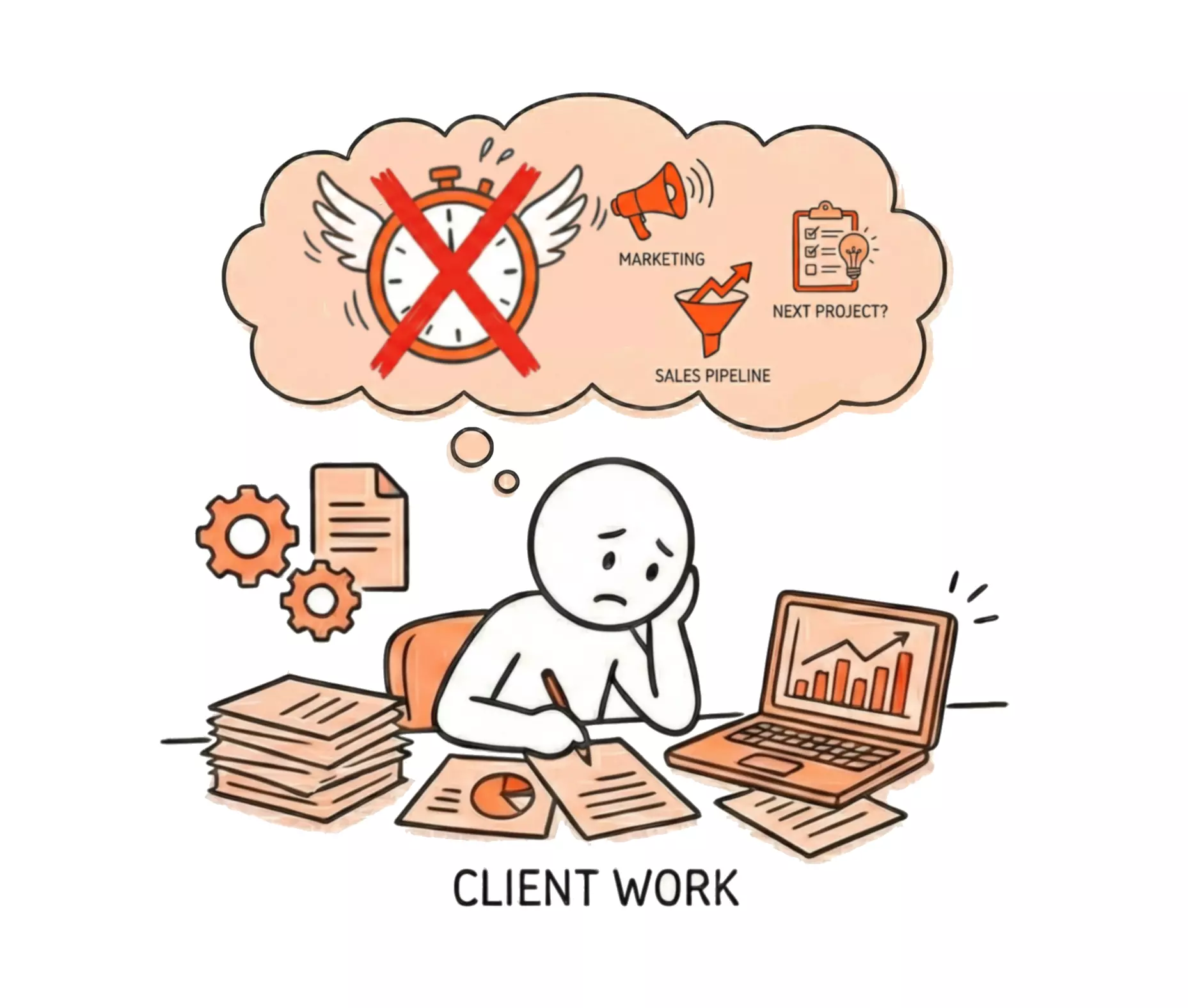
How does one person balance all of this without constantly feeling behind?
The AI Tool Illusion
And many of them, understandably, assume that all the hype around AI must be hiding some kind of breakthrough.
So they ask the right question: How can I leverage AI? Not out of hype, but out of necessity.
If you're going to be a one-person firm, you need help. And isn't AI supposed to be capable of replacing entire roles now?
But understanding your own business is one challenge. Understanding which AI tools actually matter is another problem entirely.
Most of these tools don't run your business. They simply give you a place to do the work. And someone still has to operate the system.
And that someone is YOU.
3 Immediate Steps While You Figure This Out
- Audit your time: Track one full week. Where are you context-switching most? Which hat is costing you the most energy?
- Pick ONE hat to stabilize first: Don't try to fix everything. Which role drains you most or blocks everything else? Start there.
- Document as you go: Voice-record your process as you work. This becomes the foundation of your system later.
The Promise of Systems
And this is where systems and automation eventually save your day.
Not by doing everything for you. But by letting you design the base flow of a department. Over time, that becomes the flow of your entire business. From input. To processing. To output.
Instead of operating every step, you validate direction and review the work once it is done. THAT is real leverage.
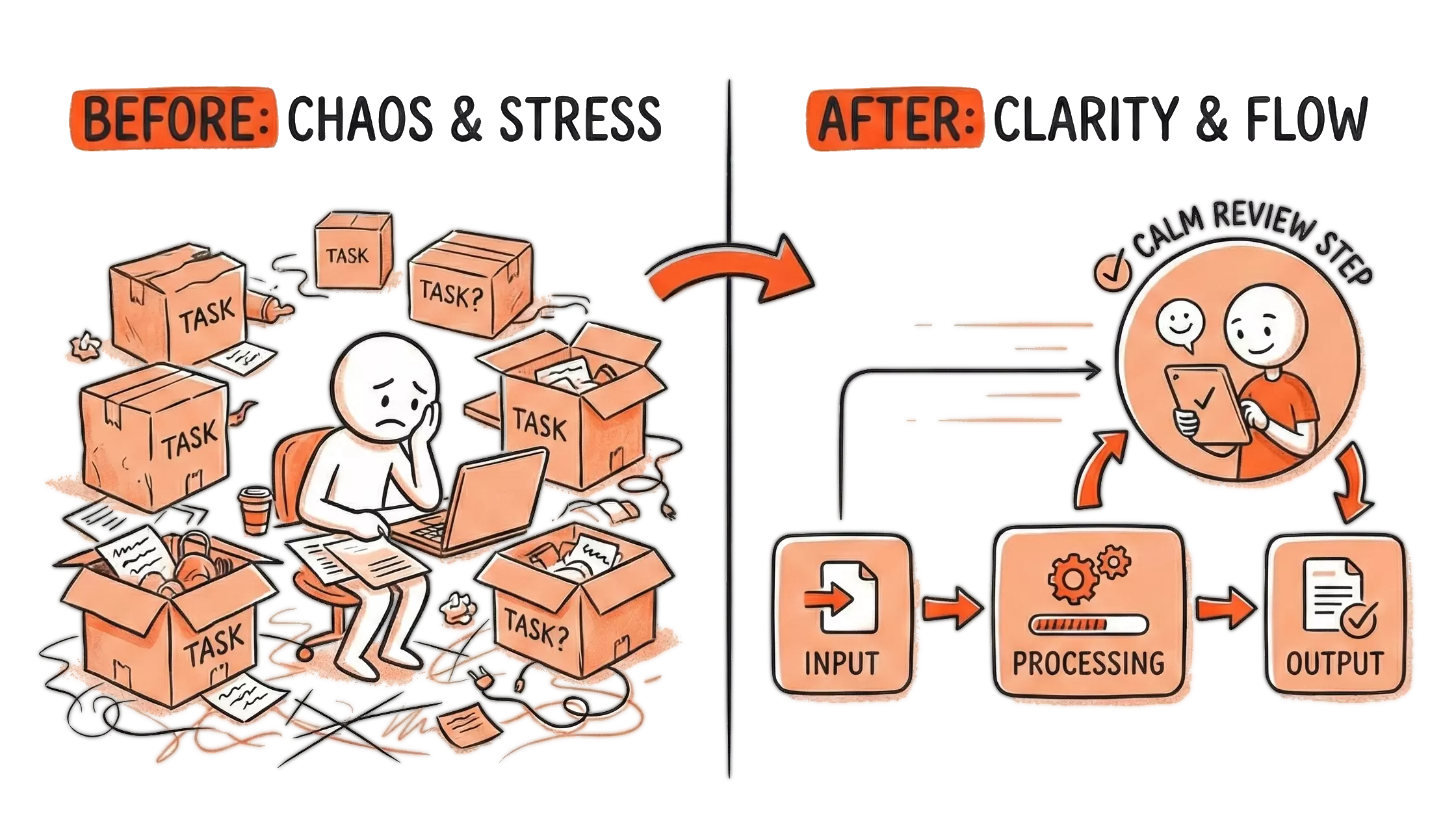
But that's a conversation for another post. Before you can build systems, you need CLARITY.
💬 What role are you trying to stabilize right now?
Reply or leave a comment. I read them.