The Last Checkpoint
The person most likely to sink your next project has been with the company for eleven years and was just promoted.
They sit high in the leadership team. Sometimes you'll find them in the C-suite. They have a long title, a large team, and an almost supernatural ability to make good ideas die slowly without ever saying no.
You know who they are. You've worked for one. You might be one.
The core argument
Companies have been failing at real innovation for decades — not because ideas were bad or budgets were small, but because the same person keeps killing them. AI didn't create this problem. It just made it impossible to ignore.
Every Transformation Has a Last Checkpoint
Not the budget approval. Not the board. A person.
Trace any initiative that stalled — really trace it, past the official explanation — and you'll find the same thing. A moment where something real was possible and one person, without dramatic obstruction, just made sure it couldn't move.
They asked for more data. They added stakeholders to the review. They scheduled an alignment meeting that led to another alignment meeting. They raised a concern that nobody followed up on, and somehow that became the reason nothing shipped.
They didn't kill it. They just made sure it never quite lived.
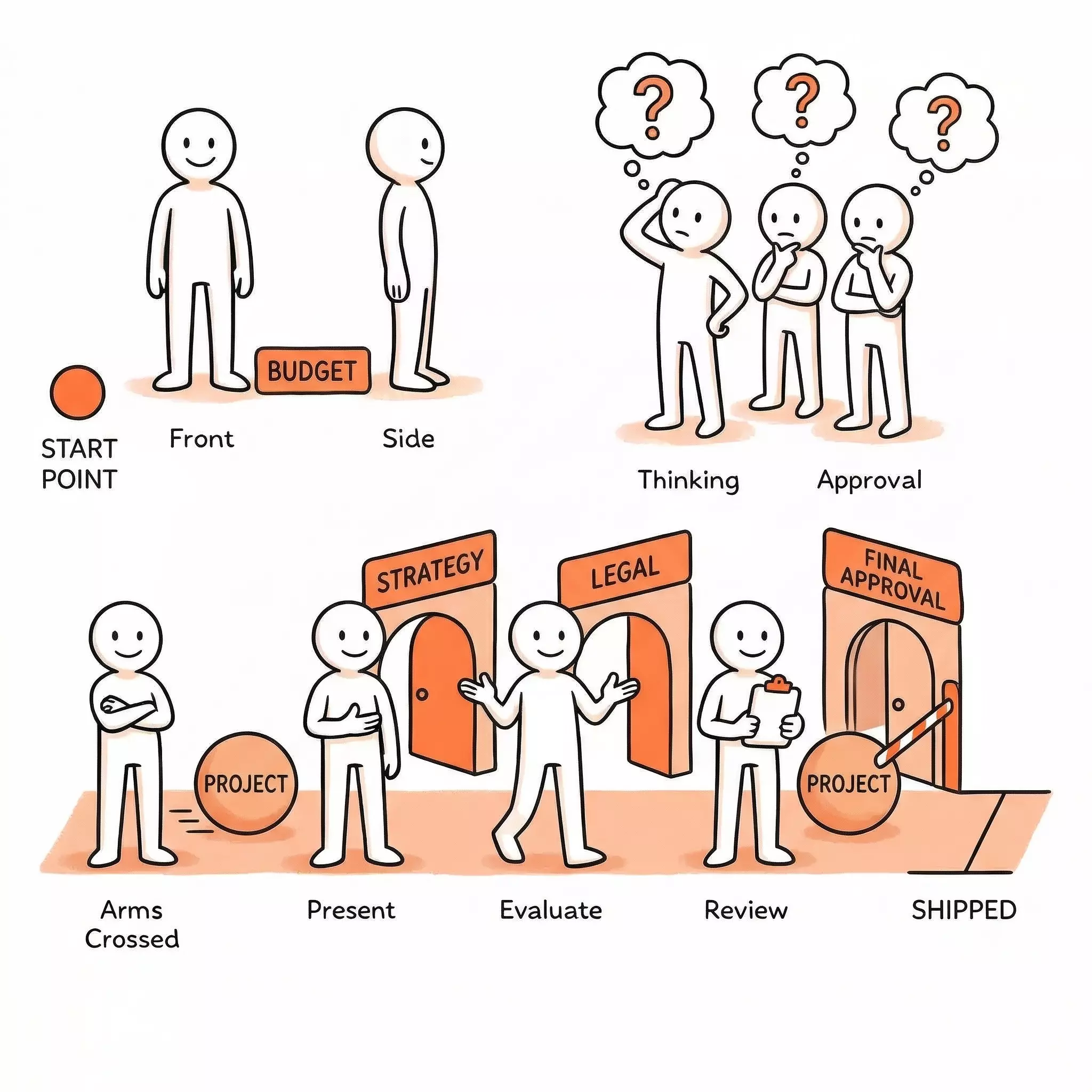
This isn't new. It didn't start with AI. Companies have been failing at real innovation for decades — not because the ideas were bad or the budgets were small, but because the same pattern plays out every time.
The only projects that consistently get through are large, inevitable, IT infrastructure-level initiatives. The kind where the vendor contract is already signed and the alternative is the lights going off.
Everything else — the real innovation, the process reinvention, the capability-building that would actually change how the company competes — gets approved to death.
Same person. Every time. Different decade.
Bureaucracy Slows Everything. The Last Checkpoint Is Selective.
That's what makes this archetype different from ordinary organizational friction.
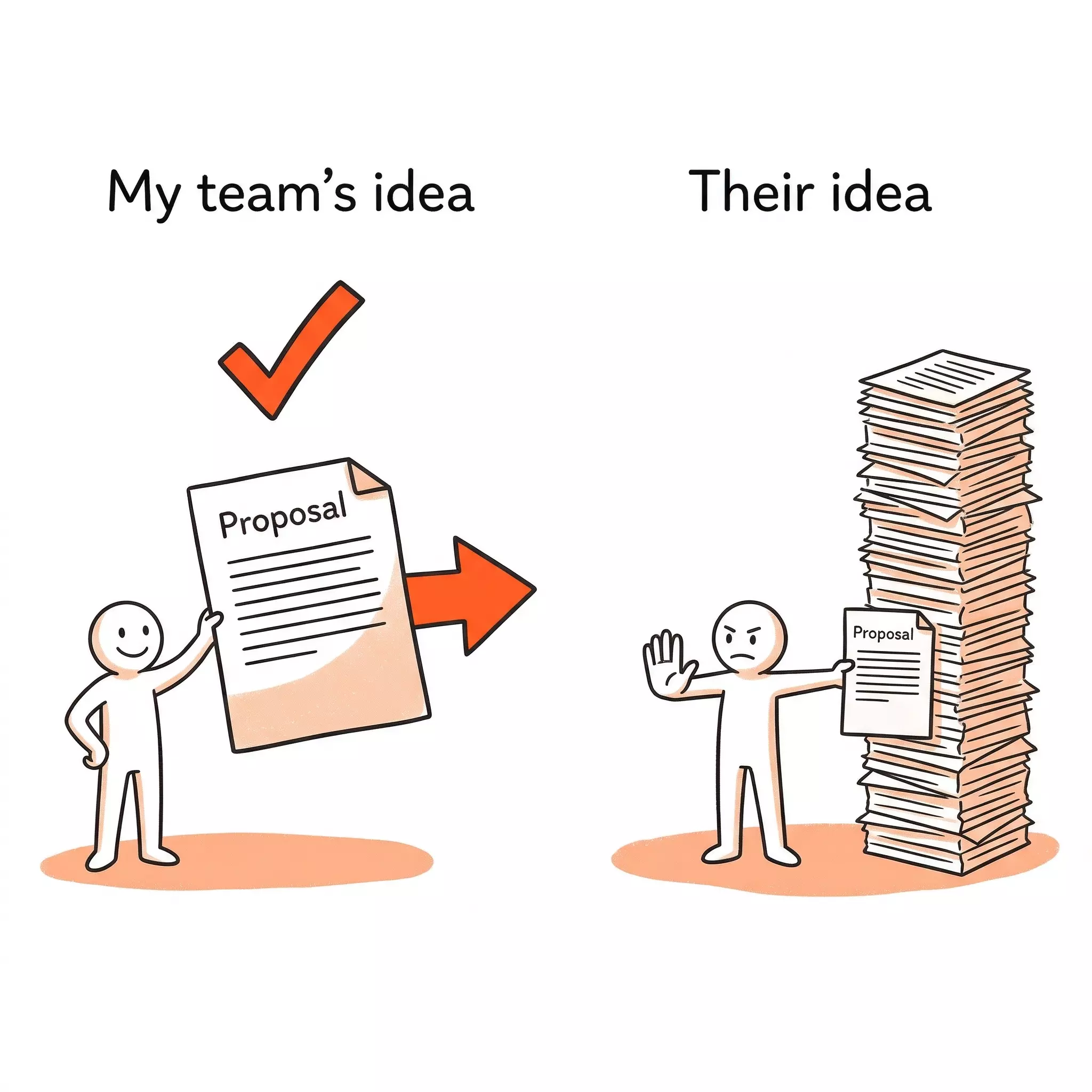
Bureaucracy slows things down uniformly. The Last Checkpoint moves fast when they're in control of the outcome. They move slowly — or not at all — when someone else built the thing, owns the relationship, or would get the credit.
The tell is the pattern, not the pace.
Watch what they approve quickly versus what gets stuck in review. Watch who they loop in versus who they quietly exclude. Watch how they respond to a proposal from their own team versus one from finance, or operations, or — worst of all — from someone below them who went slightly around the process.
The obstruction isn't ideological. It's territorial. There's a difference.
They Call It Protecting the Business. They're Protecting Their Position.
This is the part nobody says out loud in the post-mortem.
When the Last Checkpoint slows an initiative, the stated reason is always legitimate-sounding. Security risk. Misalignment with strategy. Need more stakeholder input. Not the right time. Each reason, taken individually, is defensible.
Taken together, across years and multiple initiatives, they form a pattern that has nothing to do with protecting the business and everything to do with protecting a budget line, a vendor relationship, a team headcount, or simply the feeling of being impossible to route around.
The cover story is coherent because they've been telling it long enough that they believe it themselves. That's what makes it hard to confront directly. You're not dealing with someone who knows they're obstructing. You're dealing with someone who has genuinely convinced themselves that their obstruction is stewardship.
That distinction matters — not because it makes their behavior acceptable, but because it tells you how the conversation has to go. You can't argue someone out of a position they didn't reason themselves into.
The Mike's Excel problem. Someone in the trenches — finance, operations, analytics — got tired of waiting and built something real. A process, a model, a system. It worked. The whole team used it. For years.
But it never got formalized. Never got resourced. Never got handed off. Because formalizing it would have meant someone owning it officially — which meant someone getting budget for it — which meant the Last Checkpoint losing a line item, a dependency, or both.
So it stayed unofficial. One person maintained it. Nobody documented it. And now it's load-bearing infrastructure that can't be touched. That's not a technology failure. That's an ownership failure. And the ownership failure was a choice.
But Here's the Part the CEO Doesn't Want to Hear.
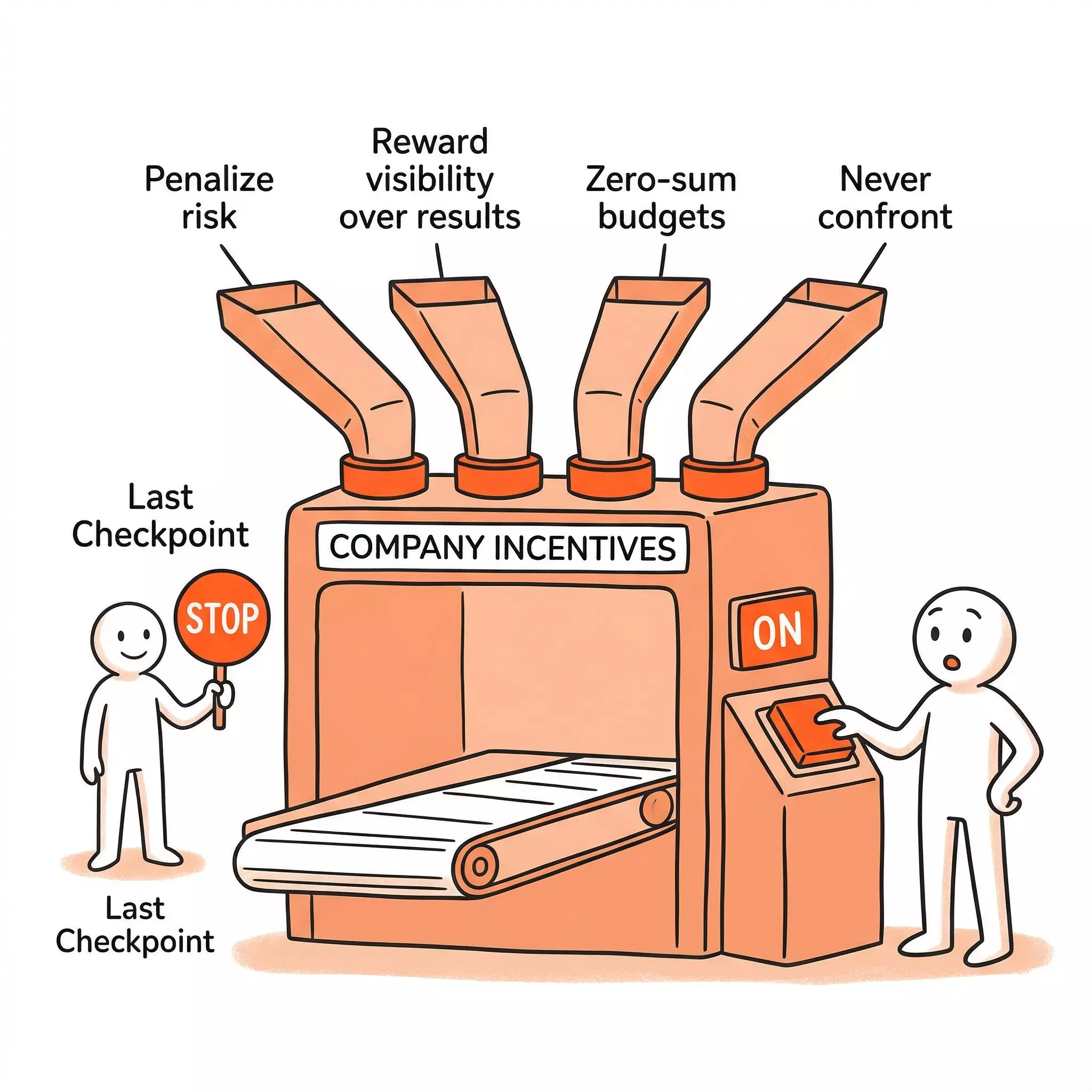
The Last Checkpoint only exists because someone above them keeps rewarding the behavior.
They didn't build this pattern in isolation. They built it in response to an environment that promoted caution over outcomes, visibility over results, and loyalty over capability. Every year they survived another reorg, every budget cycle they came out larger than they went in, every initiative they quietly killed without consequence — that was the organization teaching them that control is the right strategy.
They're not a rogue element. They're a product.
Which means if you're the CEO, or the board, or the executive who's been watching this pattern and calling it "stakeholder management" or "institutional knowledge" — you don't just have a personnel problem. You have a system problem.
Replacing this person without changing the environment that built them will grow you another one. Faster, probably, because the environment is now proven.
The hard question isn't who your Last Checkpoint is. The hard question is what decisions you made — about performance, about reward, about what you chose not to confront — that gave them permission to become one.
Now the Uncomfortable Part.
You've been reading this as a diagnostic. A way to identify the person in your organization who fits this description.
Stop for a moment and run it the other way.
Think about the last initiative that came to you from below. The one that had real energy behind it, a credible person driving it, a legitimate case for moving forward. Think about what you did with it.
Did you sponsor it clearly and remove the obstacles in its path? Or did you ask for more data, add a stakeholder, suggest it needed more alignment before moving forward?
Did you give it air, or did you give it process?
Because the Last Checkpoint is rarely a villain in their own story. They're usually a senior leader who genuinely believes they're being responsible. Who has confused the job of leadership with the job of approval. Who has spent so long inside a system that rewards caution that they can no longer feel the difference between due diligence and obstruction.
The most dangerous version of this archetype isn't the one you can easily identify and name. It's the one sitting in your own chair.
Making decisions that feel measured and appropriate, while the people below you are quietly learning that real ideas don't survive contact with your calendar.
What AI Changed — And Why This Suddenly Matters More.
For years this pattern was survivable. Painful, wasteful, demoralizing — but survivable. The companies that moved slowly on innovation paid a cost, but the cost was diffuse and slow-moving.
That window is closing.
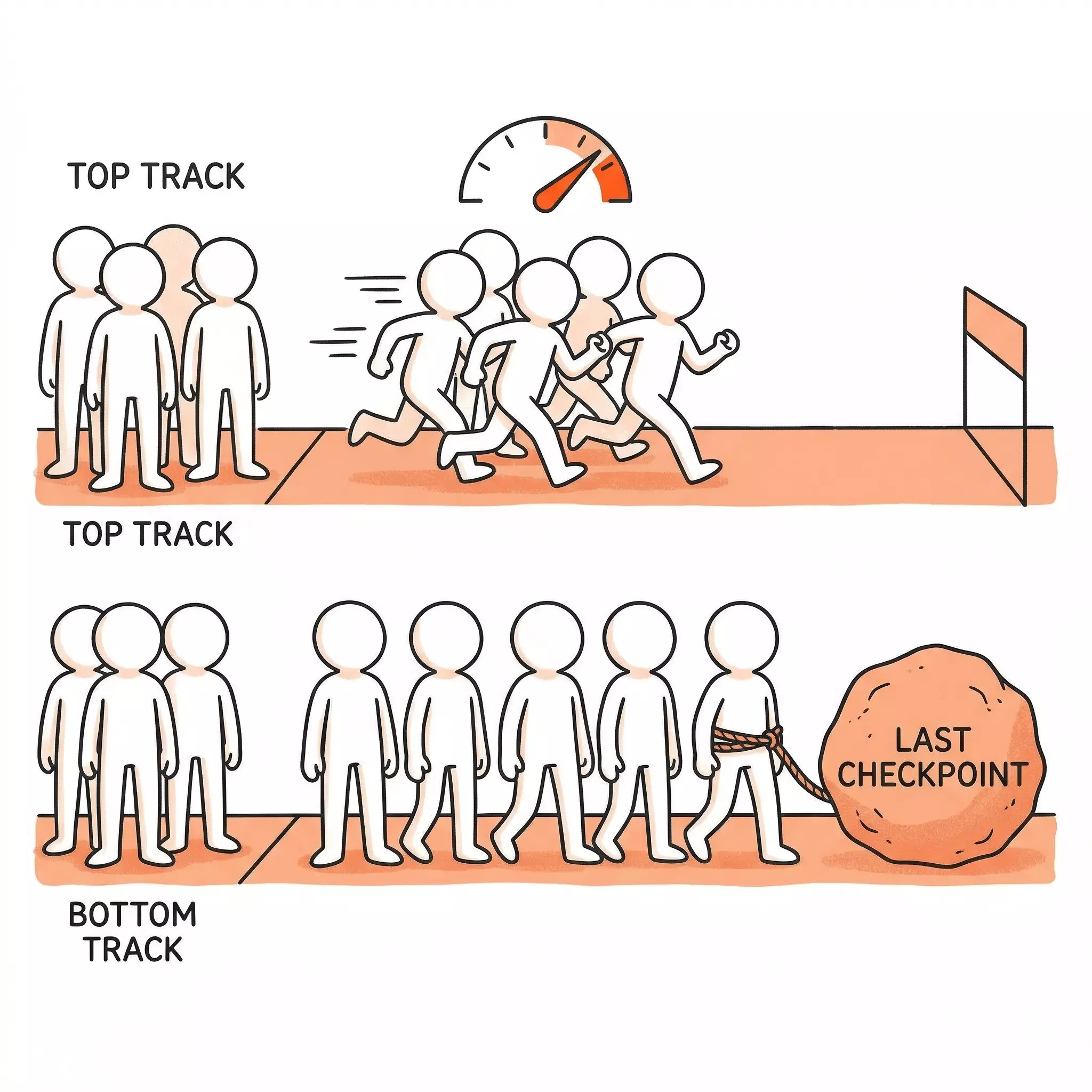
The gap between what's possible now and what most organizations are actually doing is measurable in weeks, not years. An analyst with the right access can build in two hours what used to require a six-month IT project. A small team with the right tools can stand up a working system in the time it takes to schedule an alignment meeting about whether to start one.
When that's the environment, a Last Checkpoint doesn't just slow you down. They become the single largest competitive liability in your organization.
And they're still being promoted.
Do you know WHO your Last Checkpoint is?
Not the official org chart version. The real one — the place where good ideas go to get processed into nothing. I'd like to hear what it looks like in your organization.
Next: The environment didn't just tolerate this leader. It built them. And until you change what the environment rewards, you'll keep growing more.