
A leadership team that's been together for years has adapted rationally to the environment it operates in — learning which risks get punished, which initiatives get approved, and calibrating ambition accordingly. That adaptation is invisible from the inside, and it compounds through every promotion made beneath them. It isn't a measure of the team's strength or its limitations. It's a measure of how long the environment has run without a redesign.
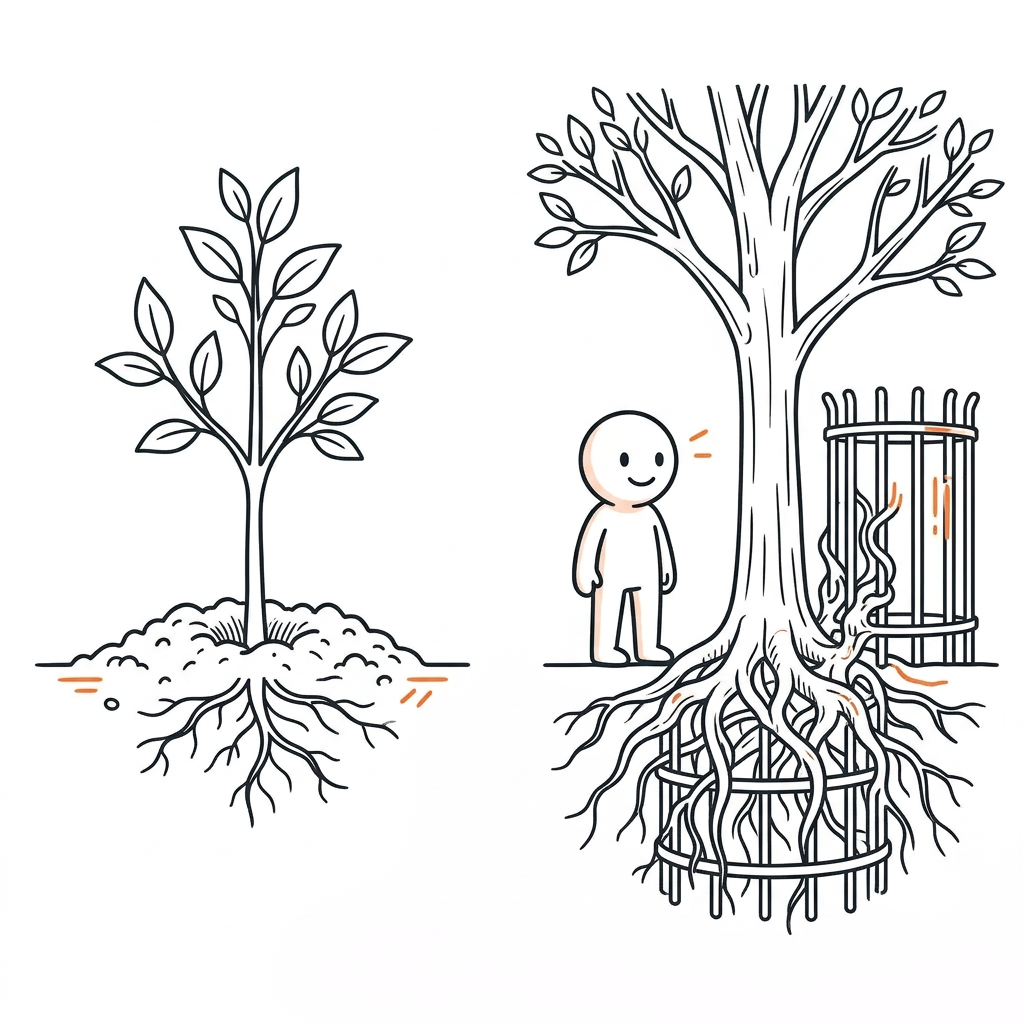
There is a version of organizational stability that looks like strength and functions like a slow-moving failure.
You've seen it. A leadership team that has been together for a long time. Deep institutional knowledge. Strong relationships. A shared language. Low turnover at the top. In most performance reviews, this gets coded as a positive — stability, retention, cultural continuity.
What it can also be is an environment that has been running long enough to fully select for the people most comfortable with it.
And that is a different thing entirely.
What Tenure Actually Builds.
When a leadership team has been in place for several years, something specific happens to each person on it. They get very good at navigating the environment they're in.
They learn which battles are worth fighting and which aren't. They learn where the real power sits. They learn whose endorsement matters, whose objection is real, and whose objection is performative. They learn the shortcuts, the workarounds, the informal protocols that exist alongside the official ones. They learn, in other words, how to be effective inside this specific organization.
This is not a criticism. It is a description of rational adaptation. Anyone operating inside an environment long enough will adapt to its incentive structure. The environment will train them — through reward, through friction, through the signals it sends about what gets approved and what doesn't.
The problem is that this adaptation is invisible from the inside.
The leader who has learned not to push certain initiatives isn't aware that they've stopped pushing them. The executive who has calibrated their ambition to what the environment will approve isn't aware that they've calibrated anything. They've just become realistic. Experienced. They know how things work here.
Tenure doesn't build wisdom in a broken environment. It builds immunity to discomfort.
The Pattern That Emerges.
Across enough organizations and enough years, a pattern becomes recognizable.
The leadership team that has been together the longest is often the most aligned — and the hardest to shift. Not because they're wrong about everything. Often they're right about most things. But their operating model, their shared assumptions about what the organization can and can't do, what customers will and won't accept, what the board will and won't approve — all of that was formed in a different market environment, with different competitors, before the current rate of technological change.
They have optimized for the conditions that produced their success. And those conditions may no longer exist.
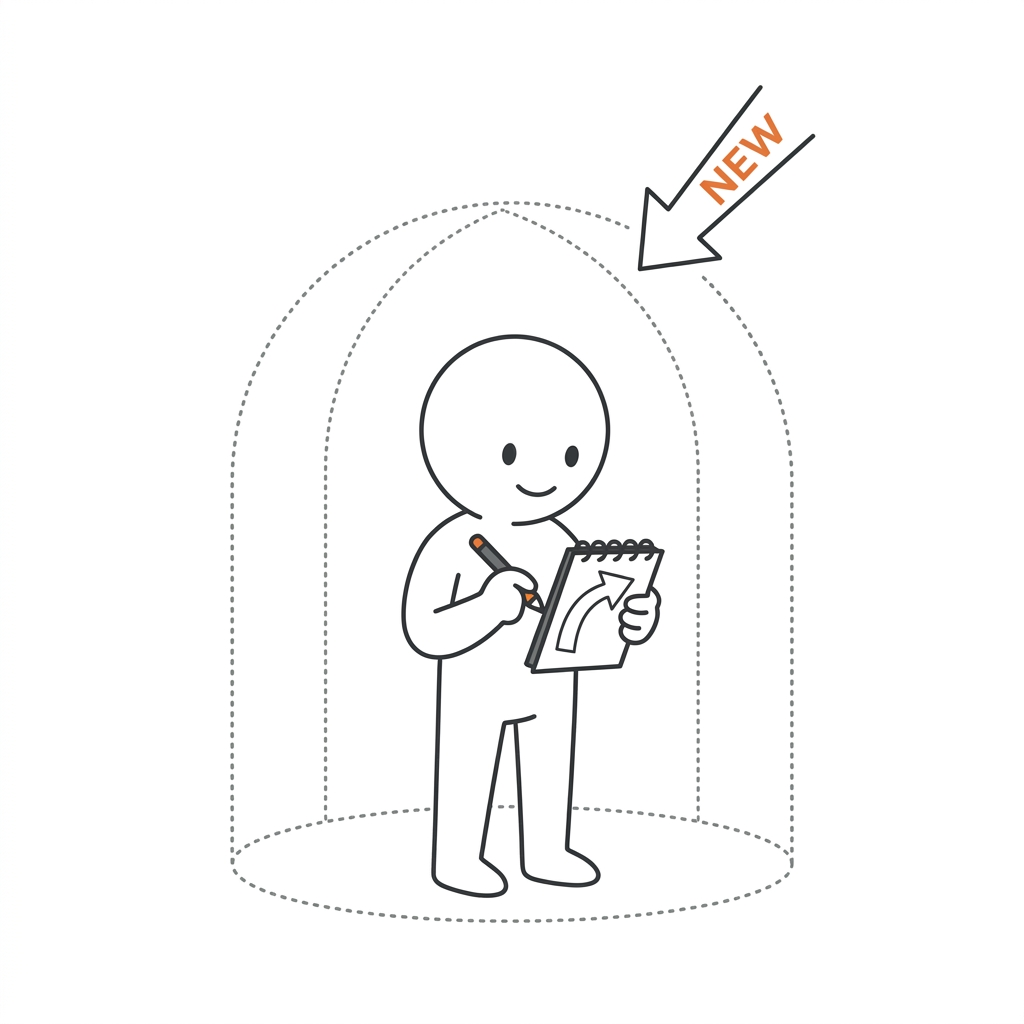
The tell is specific: when a tenured leadership team encounters something genuinely new — a competitive threat, a technology capability, a market shift — the first response is almost always to fit it into the existing framework. To explain why the new thing is consistent with the existing strategy. To identify the piece of it that resembles something the organization already knows how to do.
The reframe is well-intentioned. It's also a defense mechanism. The existing framework is what they're adapted to. It is where they have leverage, relationships, and proof that they can deliver. A genuinely new thing requires all of that to be rebuilt — and the environment they've adapted to doesn't reward rebuilding.
So the existing framework usually wins.
Why This Is an Environment Design Problem, Not a People Problem.
The instinct when this pattern becomes visible is to target the individuals. The long-tenured executive who keeps blocking the new initiative. The leadership team that seems incapable of genuine change. The cultural inertia that feels like it lives in the people.
It doesn't live in the people. It lives in the environment.
The same executives, placed in a different environment — one that selects for different behaviors, rewards different risks, measures different outcomes — would adapt to that environment too. They're not structurally incapable of change. They are adapted to the environment they've been operating in. Change the environment and the adaptation follows.
This is what makes tenured leadership teams so hard to shift from the inside. The environment that selected for their current behavior is the same environment they have the authority to maintain. They are, by definition, the people who learned to thrive in it. They are not the people with the most incentive to change it.
The Compounding Effect.
There is a compounding element to this that matters.
The longer a leadership team has been in place, the more thoroughly the organization below them has been selected by the same environment. The managers who rose through the ranks during their tenure were promoted according to the same criteria. The processes that survived were the ones that fit the leadership team's operating model. The culture that calcified is the one their decisions reinforced over years.
This means that the environment doesn't just affect the leadership team. It is reproduced throughout the organization, at every level, through every promotion decision and every budget cycle. By the time the problem becomes visible — usually through a competitive loss or a failed transformation — it is not concentrated in the leadership team. It is structural.
Replacing the leadership team at that point is genuinely useful, but insufficient. A new leadership team dropped into the same environment will face the same structural resistance. The environment will train them too.
What Actually Changes Things.
The answer is not to replace tenured leaders with new ones. Some of the sharpest organizational transformations are led by people who have been in the building for decades.
The answer is to change what the environment selects for — deliberately, with enough specificity that the change is real rather than rhetorical.
That means examining the five incentives that shape leadership behavior: how risk is rewarded relative to inaction, whether visibility or outcomes drive advancement, whether resources are allocated collaboratively or territorially, whether delegation is supported or exposed, whether loyalty or capability is the actual criterion for promotion.
A tenured leadership team adapted to an environment where risk is punished, visibility matters more than outcomes, and resources are zero-sum will not become a bold, outcome-focused, collaborative team because the CEO gave an all-hands speech about transformation. They will remain adapted to the environment.
Change the environment. The adaptation follows.
The tenure of a leadership team is not a measure of strength or weakness. It is a measure of how long the current environment has had to do its work.
How long has your environment been running without a redesign?
— Raf Alencar